
With eggplants and tomatoes at their seasonal best, making this comforting eggplant parmigiana felt like the most natural choice.
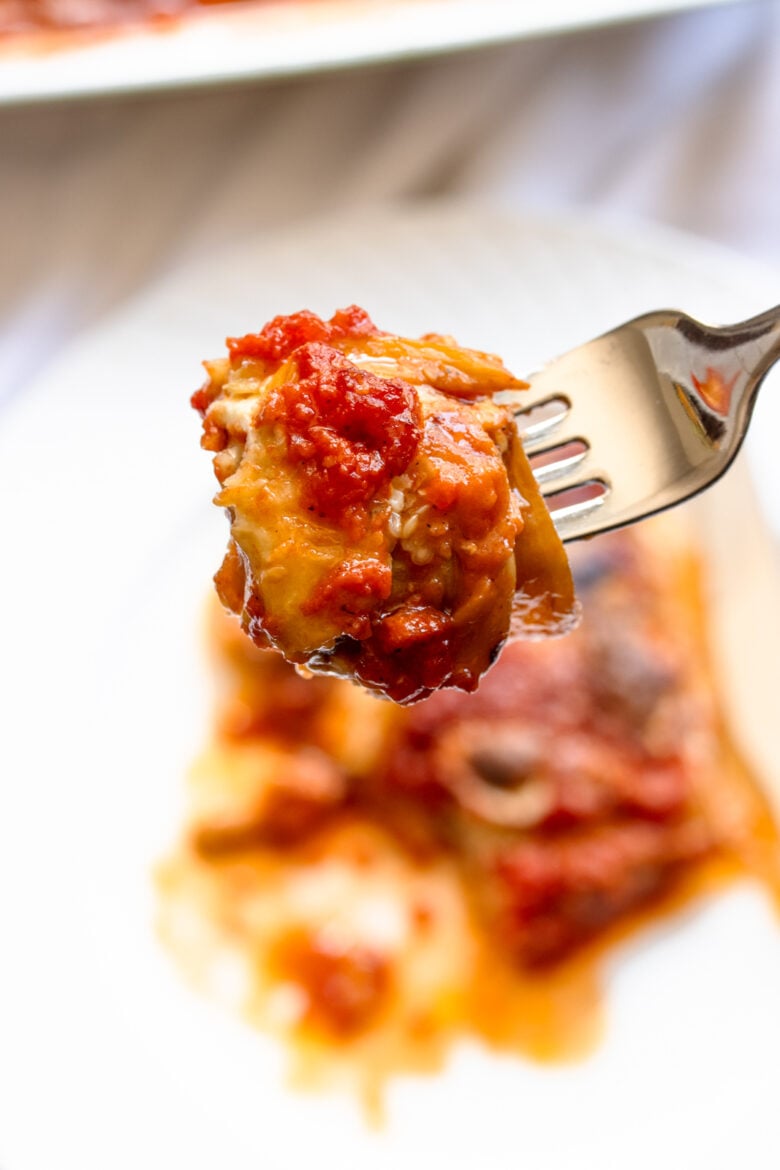
Eggplant Parmigiana, or Parmigiana di Melanzane, is one of those comforting Italian dishes that brings everyone to the table. Layers of tender fried eggplant, rich tomato sauce, Parmesan, and melting mozzarella come together in every savory bite.
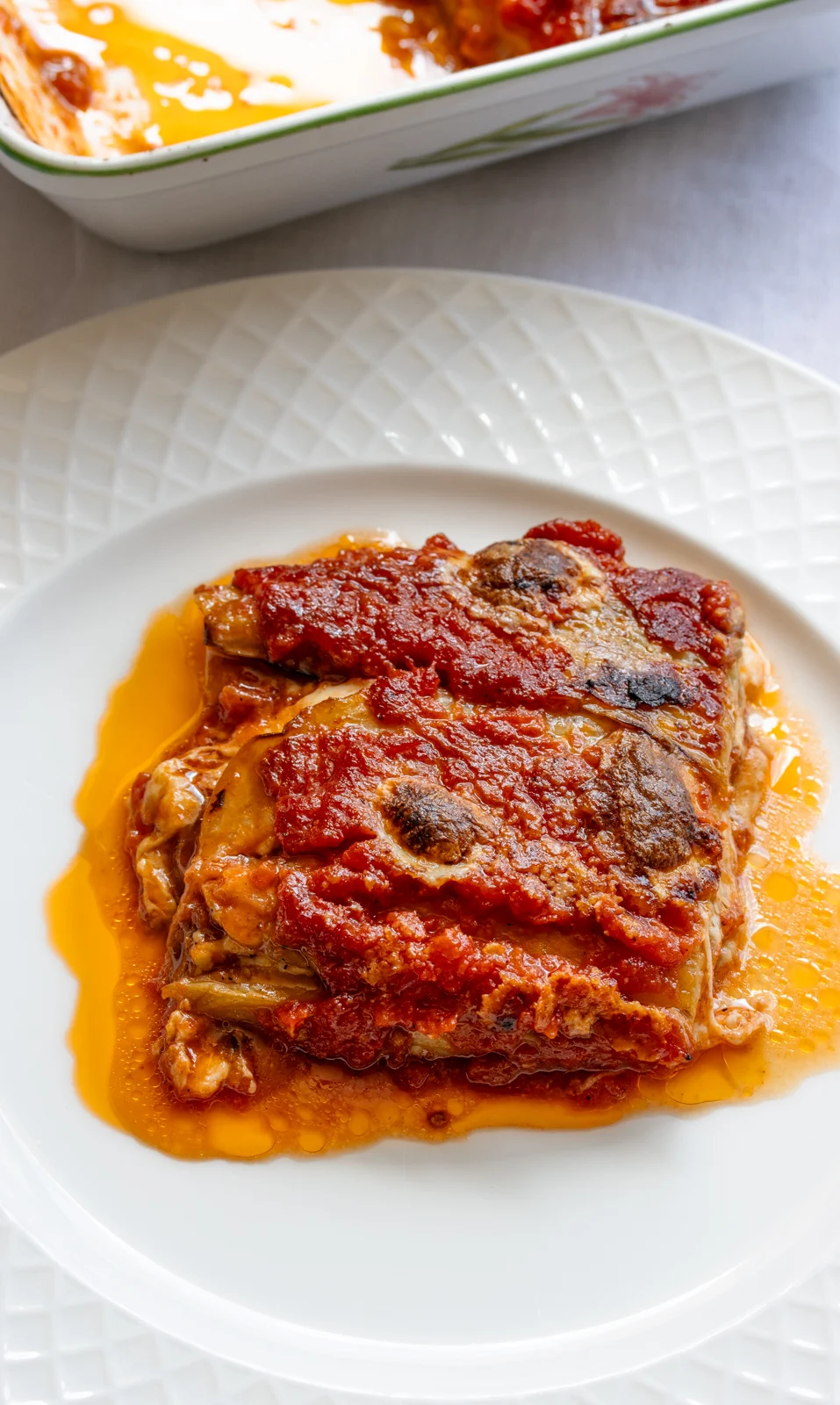
This recipe became part of our Sunday dinner after my son requested eggplant, something I was certainly not going to question from a teenager. Since it is also one of my favorites, I happily went straight to the kitchen.
I do have vivid memories of my mom making this dish when I was a child in the summer in Italy. To make sure I would be reading my book, she would entrust me to sit over the huge colander with a weight over it to press all the water out of the eggplant. I know it was more to keep an eye on me, but I did not mind being in the kitchen where all the action was.
After making this traditional dish for years, I have learned that a few simple steps make all the difference. I peel the eggplant, slice it lengthwise for even cooking, and salt it before frying to draw out excess moisture and bitterness.
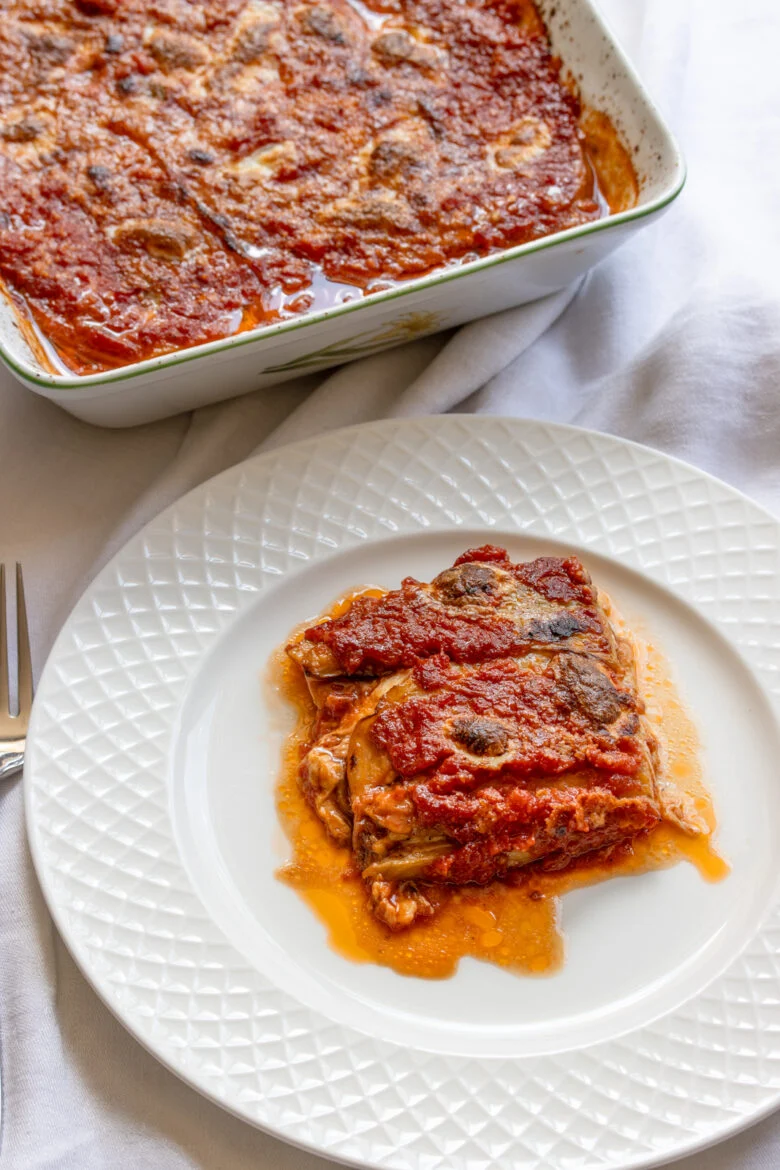
Once assembled and baked until golden, allow the Parmigiana to rest before serving. This gives the layers time to settle and makes it much easier to slice.
This inviting meal is satisfying and hearty, making it ideal for family gatherings. To this day, it remains one of our favorite Sunday night dinners.
In this Article
- A Note From Giangi
- Ingredients needed to make the best eggplant parmigiana recipe
- Step-by-step instructions on how to make this delicious parmigiana of eggplant
- Why do we remove the garlic and basil from the tomato sauce?
- Giangi’s Pro Tips
- What dishes can you enjoy with this classic Italian eggplant parmigiana?
- Variations and Substitutions
- Storing and Reheating
- Frequently Asked Questions
- If you enjoy this Eggplant Parmigiana, you may want to try my other recipes:
- Eggplant Parmigiana
I invite you to read all my tips to achieve this parmigiana effortlessly under Giangi’s Pro Tips section.
A Note From Giangi


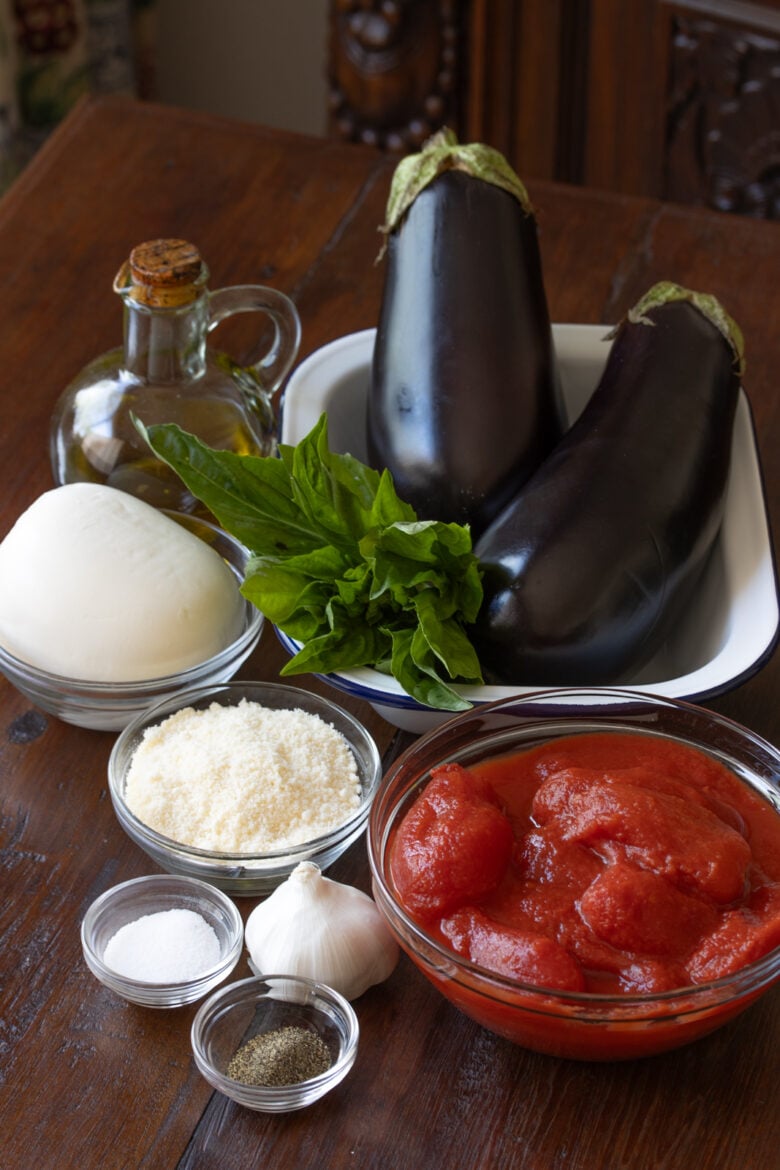
Ingredients needed to make the best eggplant parmigiana recipe
This is a short introduction. The ingredient list is also brief. It includes essential items that you may already have in your pantry. Please read the recipe for complete instructions.
Eggplants – fresh and free of any bruising. Ensure that they are all the same size so they will cook evenly. I usually purchase smaller to medium size as they contain less acidity.
Canned San Marzano tomatoes – the best Italian tomatoes and perfect with all your tomato sauces. Most canned tomatoes are peeled but whole; I do suggest seeing instructions to pass them through a blender to make them smooth. A great alternative if you have a specialty store nearby: use tomato passata.
Garlic cloves add an amazing flavor to the oil and to the tomato sauce.
Basil leaves– always adds such a fantastic aroma to all your dishes
Mozzarella – melting between the layers of eggplant, a real treat. Galbani and Murray’s are my favorite brands as they melt to perfection when baked.
Parmesan cheese – adds a layer of flavor to your parmigiana. I used very fine grated Parmesan cheese with this recipe.
Oil – to fry your eggplant and to cook the tomato sauce.
Salt and pepper are the seasonings needed for this recipe. Be cautious with the salt as the Parmesan cheese is quite salty in itself.
Step-by-step instructions on how to make this delicious parmigiana of eggplant
For all my recipes, please gather all the ingredients before you start cooking or baking, and I will guide you every step of the way.
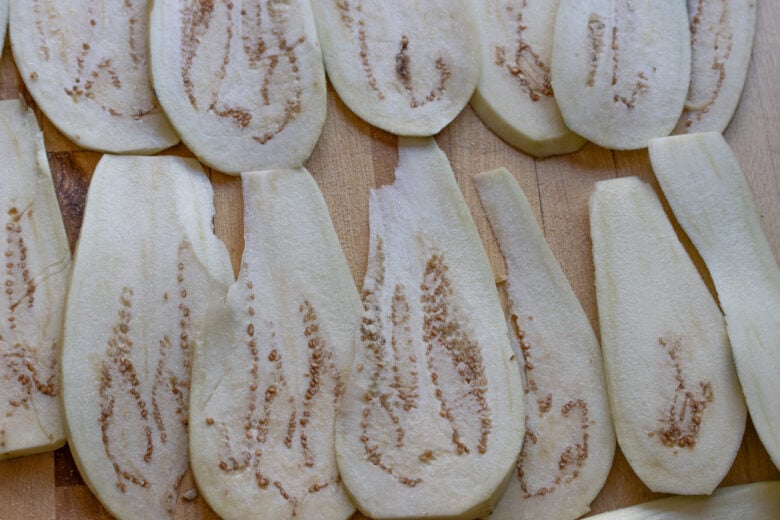
- Clean the eggplant, remove the top end core, peel and slice lengthwise, making sure each slice is evenly cut.
- Place the slices on a cutting board, salt generously, cover with another cutting board or any heavy object you have, and let it rest for a minimum of 30 minutes. I often place paper kitchen towel over them to absorb the water. Optional.
- Another easy method if you do not want to use a cutting board is to place your slices in a large colander, add salt between each layer of eggplant, and press down with a heavy weight. Place it in the sink and let the excess moisture run off. Rinse, pat dry, and continue with the recipe.
- While the eggplant is resting, prepare the tomato sauce by cooking the garlic until light golden bown. Toss in the tomato sauce and the fresh basil. Cook for 5 minutes and remove the basil.
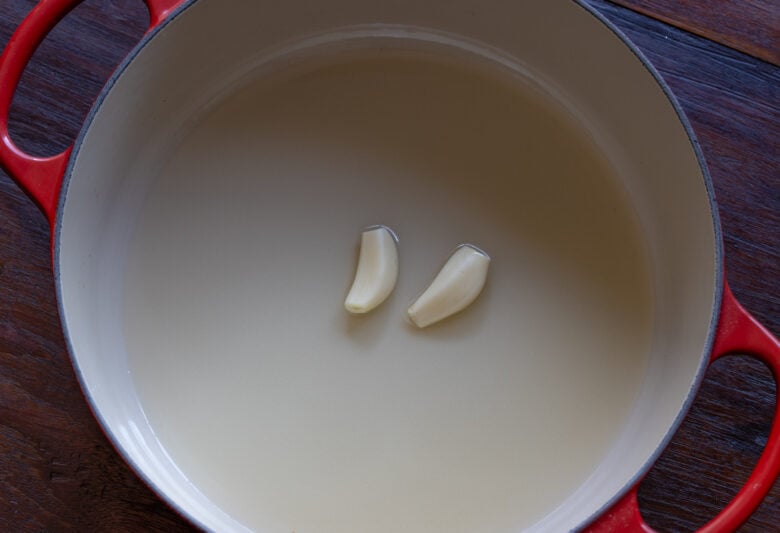
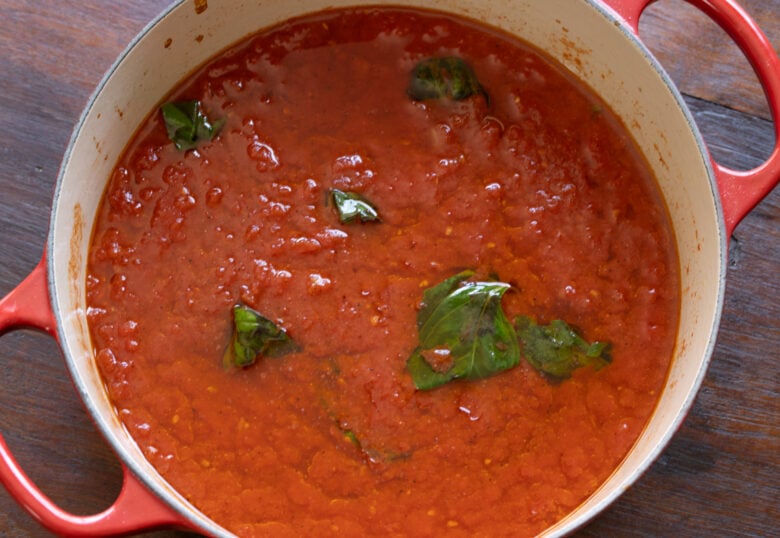
- At this point, the eggplant should be ready to be fried. Pat them dry with paper towel or rinse them under cold water to remove the excess water. Ensure that they are fully dry before entering your hot skillet.
- Heat the cooking oil over medium-high heat until hot but not smoking. Gently slide the eggplant slices into the skillet, minding not to overcrowd them. Turn them with cooking tongs once until translucent and a light golden color is showing.
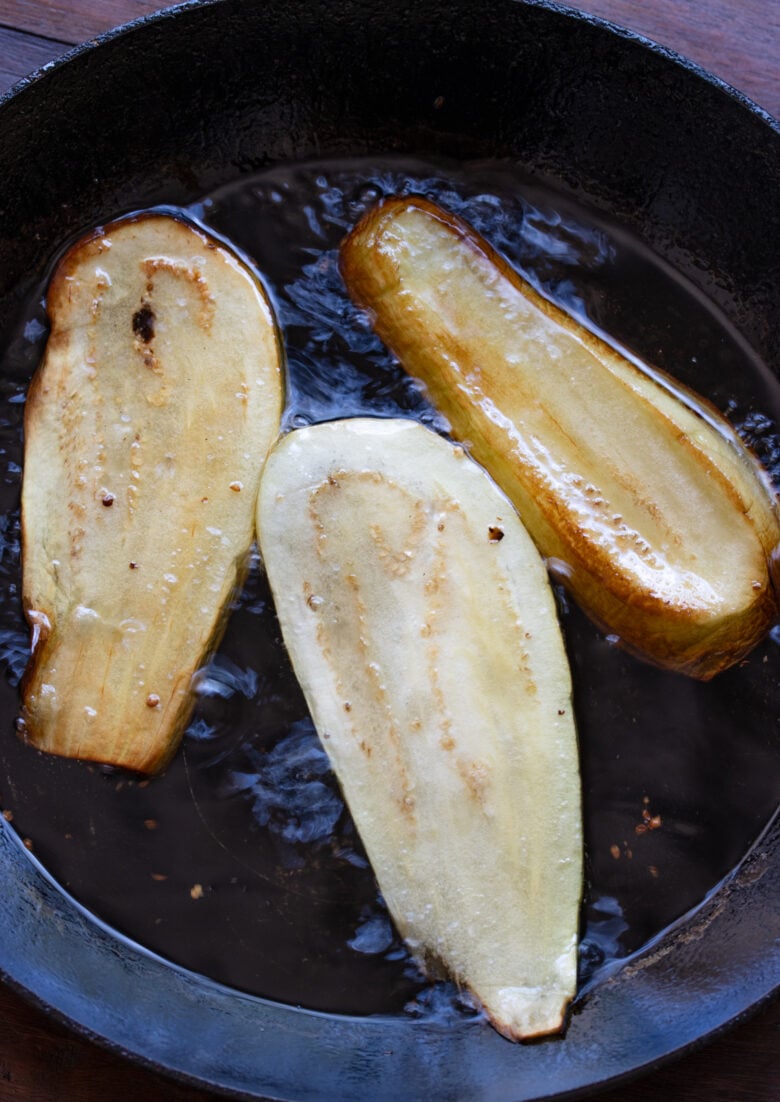
- Remove them from the skillet and place them over a paper towel-lined cooling rack over a cookie sheet to drain any excess oil.
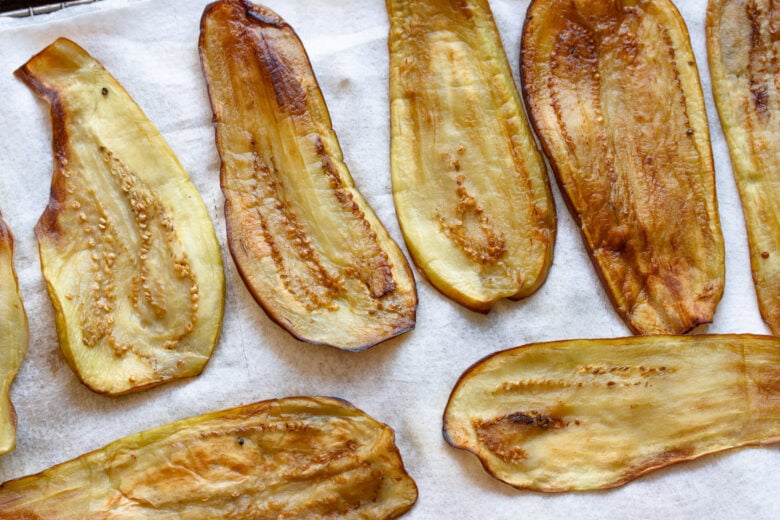
- Preheat the oven to 400 F
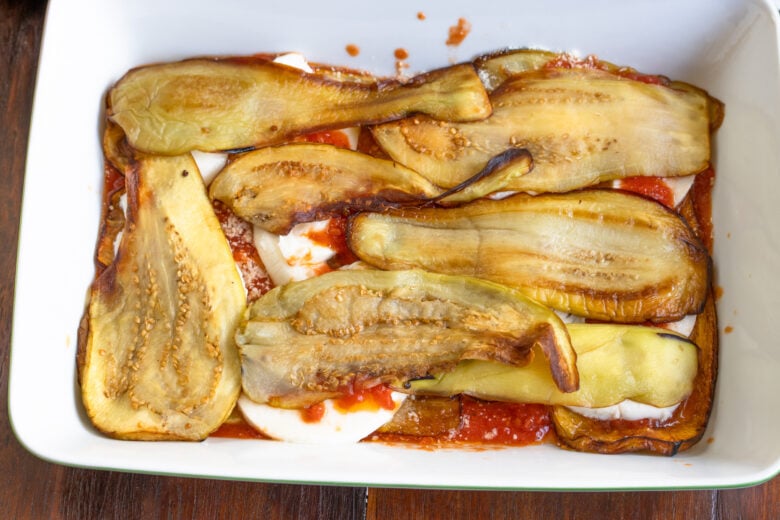
- Place one layer of tomato sauce on the bottom of an oven-proof baking dish, cover with the eggplant slices, and place them next to each other. Cover the eggplant with the tomato sauce.
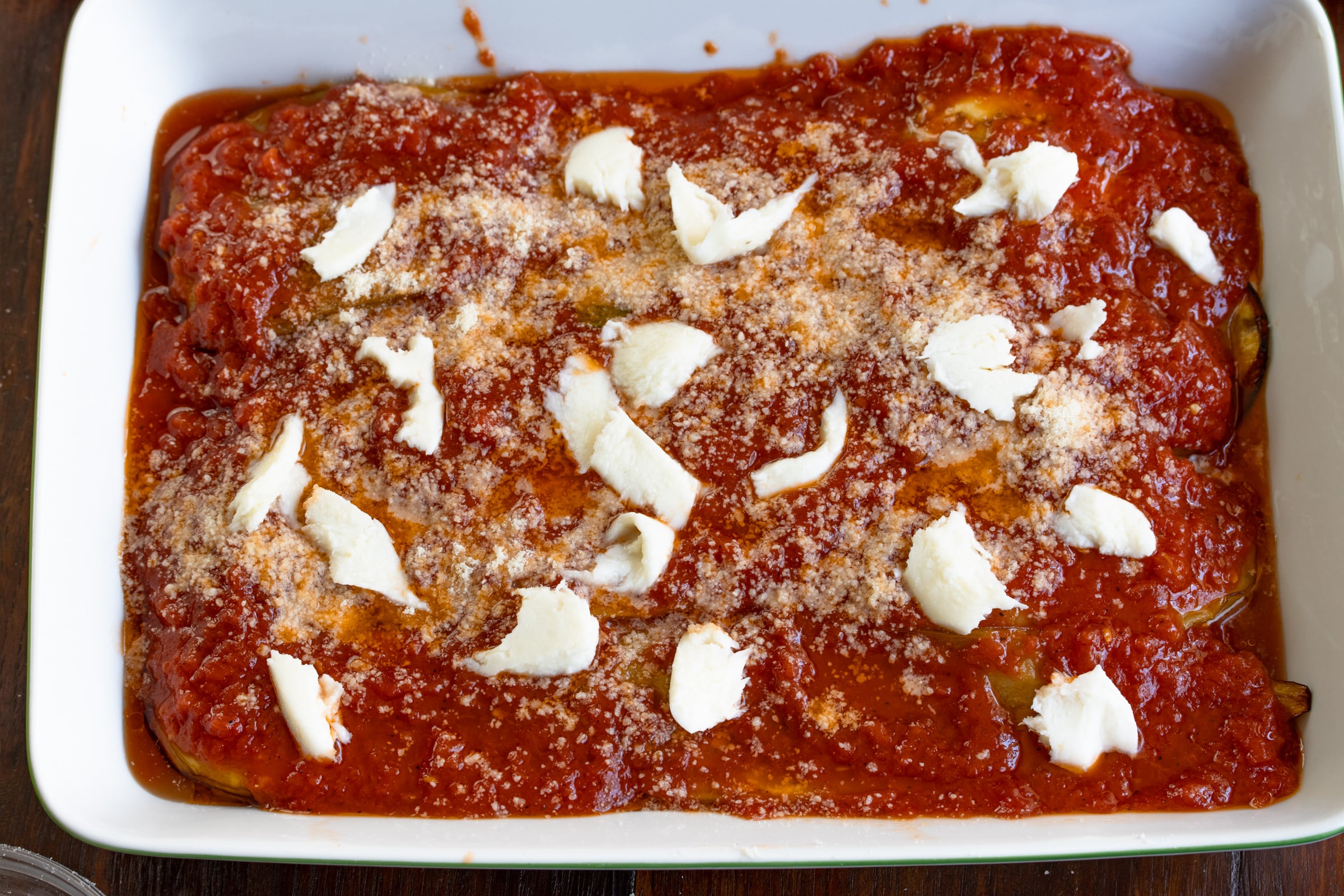
- Sprinkle a generous amount of Parmesan cheese over it. Add the mozzarella cheese over it and season with salt. Repeat the same steps until you finish with a layer of eggplant covered with tomato sauce.
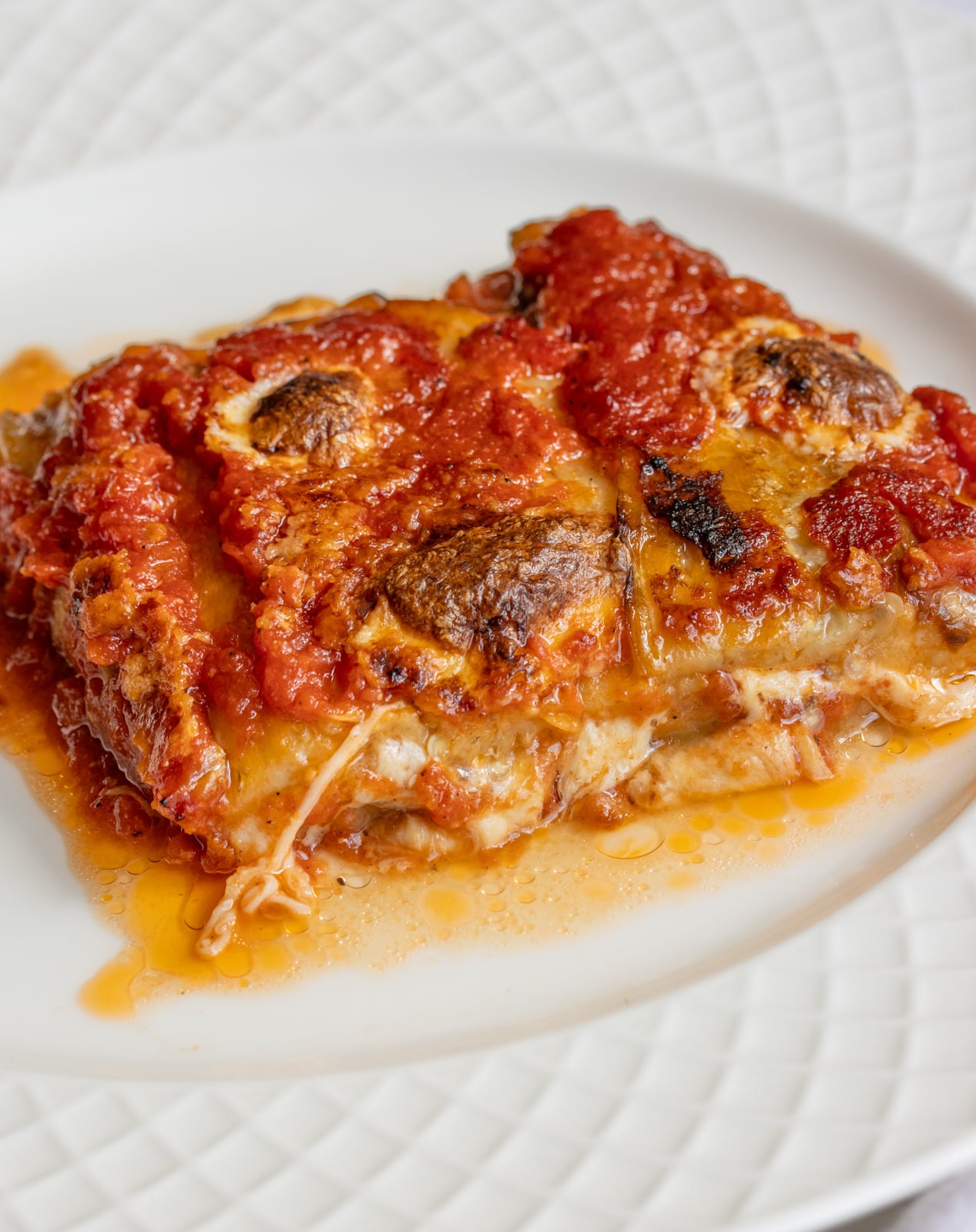
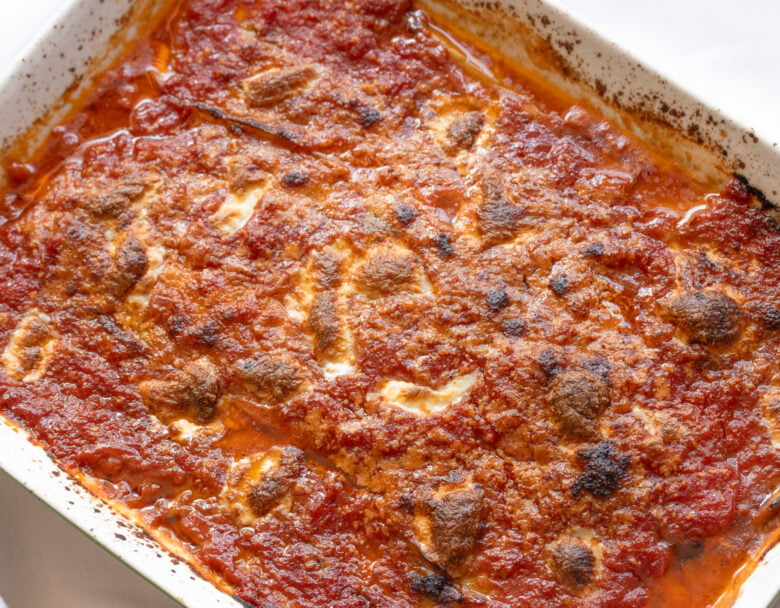
- Sprinkle any remaining cheese over it and bake in the hot oven for 35 minutes. The crust should be golden and the cheese stringy when cutting into it.
- Let your eggplant parmigiana rest for 10 minutes and enjoy.
Why do we remove the garlic and basil from the tomato sauce?
I have been asked this question many times: Why does Italy’s tomato sauce often have the garlic and basil removed? The answer is straightforward: flavor.
Garlic adds a lovely aroma and taste, but after infusing the sauce, it’s best left out to prevent the dish from becoming overpowering. The same applies to the basil.
Giangi’s Pro Tips
- Make sure you remove the outer rind of the eggplant and let it rest pressed with the salt to remove the acidity.
- Also, slice the eggplant lengthwise instead of in rounds. It will cook better and more evenly.
- Letting the eggplant slices sweat out the bitterness, pull out extra water, and stop from soaking up too much oil when cooking.
- Another easy method if you do not want to use a cutting board is to place your slices in a large colander, add salt between each layer of eggplant, and press down with a heavy weight. Place it in the sink and let the excess moisture run off. Rinse, pat dry, and continue with the recipe.
- To test if the oil is hot, add a tiny piece of eggplant, or anything you may be cooking, into the hot skillet with the oil. Once it starts to bubble, your oil is hot, and you can proceed with the recipe.
- When cooking with hot oil, always slide your ingredients into the pan, in this case the slices of eggplant, gently from the side. This prevents splatter and the risk of burning yourself.
- Use cooking tongs with a long handle to turn your eggplant when frying.
- Remove the eggplant slices from the skillet and place them over a paper towel-lined cooling rack over a cookie sheet to drain any excess oil. This will allow the eggplant to drain any excess oil and not be soggy.
- Once out of the oven, let it rest, as it will be scorching. This dish can also be prepared a few hours, or even the night before.
What dishes can you enjoy with this classic Italian eggplant parmigiana?
Eggplant parmigiana is rich in flavor and satisfying enough to serve as the main course. I love to pair it with something fresh and simple that can balance the tomato sauce and melted cheese without competing with them.
Here are a few of my suggestions for combinations that we have enjoyed this dish with:
Tomato and arugula salad. The arugula has a hint of peppery, and the fresh tomato is light, which is the perfect refreshing contrast to the eggplant.
Another crispy and refreshing Italian summer favorite: fennel, tomato, and basil salad.
Easy green beans gremolata is the flavorful, simple, and perfect alongside dish. This is the perfect outdoor dining party experience
Last but not least, rosemary focaccia, which is wonderful for gathering every last speck of tomato sauce from your plate.
Variations and Substitutions
- If you want a richer Parmigiana, you may add cooked ham between the Parmesan cheese and the mozzarella.
- You can use fresh tomatoes. Cook for a few minutes in hot water, then peel them, cut in half, remove seeds, and cut them into fillets.
Storing and Reheating
Store: Store your leftovers covered with foil or placed in an airtight container and store in your refrigerator for up to three days.
Reheat: Bring back to room temperature, place in an oven-proof dish, cover with foil, and reheat in the oven at 325°F for 15 to 20 minutes or until warm. Each oven is different; therefore, you will need to adjust the timing.
Frequently Asked Questions
What is the difference between eggplant parmesan and eggplant parmigiana?
There is no difference, as they are both the same way. Eggplant parmigiana is translated from the Italian “parmigiana di melanzane”.
What are some common mistakes making eggplant parm?
Using uneven or too thick slices and adding way too much tomato sauce.
What is the secret to great eggplant parmigiana?
The secret is managing the moisture by allowing the eggplant to release the moisture when seasoned with salt. Using a great tomato sauce and mozzarella that melts. Letting it rest before eating allows all the ingredients to solidify.
If you enjoy this Eggplant Parmigiana, you may want to try my other recipes:
Eggplant Parmigiana
Ingredients
- 2 pounds of eggplant
- 1 pound San Marzano tomatoes, peeled
- basil, few leaves
- 2 garlic cloves, peeled, hard end core removed.
- 1 pound fresh mozzarella, sliced
- 1 cup Parmesan cheese, finely grated
- cooking oil, as needed for frying
- Salt, to taste
- pepper, to taste
Instructions
- Clean the eggplants and remove the skin and the top core. Cut the eggplant lengthwise, making sure to keep the same thickness
- Place the cut slices on a cutting board and salt each layer. Place a cutting board over the eggplant slices and make sure it is over the sink, slightly tilted so all the bitter juice drains off. Let it rest for about 30 minutes.
- While the eggplants are resting, start the tomato sauce. Peel the garlic and place in a pan with a couple of tablespoons of oil. Cook the garlic until golden and then toss.
- Add the tomatoes to the pan. If using whole peeled tomatoes, give them a few turns in the blender. Add salt, pepper, and basil. Cook at low heat for 5 minutes and then remove the basil.
- When the eggplant is ready to fry, dry it with paper towels and fry 3-4 slices at a time with plenty of hot oil ( not smoking, or they will burn). When golden, remove and place on paper towels over a cooling rack placed over a cookie sheet.
- Preheat the oven to 400 F
- In an oven-proof dish, add a layer of tomato sauce, then cover with eggplant slices placed side by side. Cover the eggplant with tomato sauce, then a rich layer of parmesan cheese. On top of the parmesan, add thinly sliced mozzarella. Add a small amount of salt over it.
- Repeat the above steps and end with a layer of the eggplant, which you will cover with tomato sauce
- Add Parmesan cheese. If there is mozzarella left, cut it into small pieces and add it on top.
- Cook the parmigiana in the oven at 400 for 35 minutes. The top crust should be golden and the cheese stringy when cutting.
- Let it rest for 10 minutes before cutting and serving.
Notes
- Make sure you remove the outer rind of the eggplant and let it rest pressed with the salt to remove the acidity.
- Letting the eggplant slices sweat out the bitterness, pull out extra water, and stop from soaking up too much oil when cooking.
- Also, slice the eggplant lengthwise instead of in rounds. It will cook better and more evenly.
- To test if the oil is hot, add a tiny piece of eggplant, or anything you may be cooking, into the hot skillet with the oil. Once it starts to bubble, your oil is hot, and you can proceed with the recipe.
- When cooking with hot oil, always slide your ingredients into the pan, in this case the slices of eggplant, gently from the side. This prevents splatter and the risk of burning yourself.
- Use cooking tongs with a long handle to turn your eggplant when frying.
- Remove the eggplant slices from the hot oil skillet and place them over a paper towel-lined cooling rack over a cookie sheet to drain any excess oil. This will allow the eggplant to drain any excess oil and not be soggy.
- Once out of the oven, let it rest, as it will be scorching. This dish can also be prepared a few hours, or even the night before.
Nutrition
Giangi’s Kitchen provides nutritional information, but these figures should be considered estimates, as a registered dietician does not calculate them.
- Course: Classics, Dinners, Sunday Night Dinner, Vegetables
- Cuisine: Italian
- Season: Spring, Summer, Fall
- Type: Affordable Gourmet
Did you make this?
Leave a comment below and tag @giangiskitchen on Instagram
Visit my Amazon Storefront for my selection of favorite kitchen essentials. I only recommend equipment that I use and love.


